How to Get CPR Certified — Step by Step
The process is simpler than you think. Here's exactly what happens from start to finish.
Step 1: Figure out which certification you need
Not all CPR and first aid courses are the same. The right one depends on your job, your goals, or what your employer requires.
The most common certifications:
- Intermediate First Aid + CPR-C — the most widely required workplace certification. Covers adults, children, and infants. Two-day or blended format.
- Basic First Aid + CPR-C — a shorter version for lower-risk workplaces. One day or blended.
- CPR-C / AED — CPR only, no first aid. Great for parents, coaches, and community members.
- BLS for Healthcare (HCP) — designed for healthcare providers, paramedics, nursing students, and medical professionals.
Not sure which one you need? Take our quick course quiz — it takes about 30 seconds.
Step 2: Choose your format
Most BraveHeart courses are available in two formats:
Blended learning
Complete the theory portion online at your own pace, then attend a shorter in-person skills day. This is the most popular option — it's flexible and gets you out of the classroom sooner.
Full in-person
Everything happens in one session (or two days for Standard First Aid). Theory, practice, and testing — all in the classroom. Good if you prefer face-to-face instruction for everything.
Both formats result in the same Canadian Red Cross certification. Learn more about how blended learning compares to in-person.
Step 3: Book your seat
Head to our courses page and pick a date that works for you. Checkout is online, and you'll get an instant confirmation email with everything you need.
Class sizes are small by design — we cap enrolment so everyone gets hands-on time. If a date fills up, new sessions are added regularly.
Step 4: Complete online theory (blended only)
If you chose a blended course, you'll receive access to the online theory modules right after booking. Work through them at your own pace — they must be completed before your in-person date.
Plan for 4–8 hours depending on the course. You can split it across multiple sessions. The content is interactive and includes knowledge checks along the way.
Tip: Don't leave the online modules to the night before. Give yourself a few days so you can absorb the material without rushing.
Step 5: Attend in-person training
This is where it all comes together. Whether you're doing a blended skills day or a full in-person course, here's what to expect.
What to bring
- Comfortable clothes you can kneel and move in
- Snacks and water (lunch break is provided for full-day courses)
- A positive attitude — that's genuinely it
What to expect
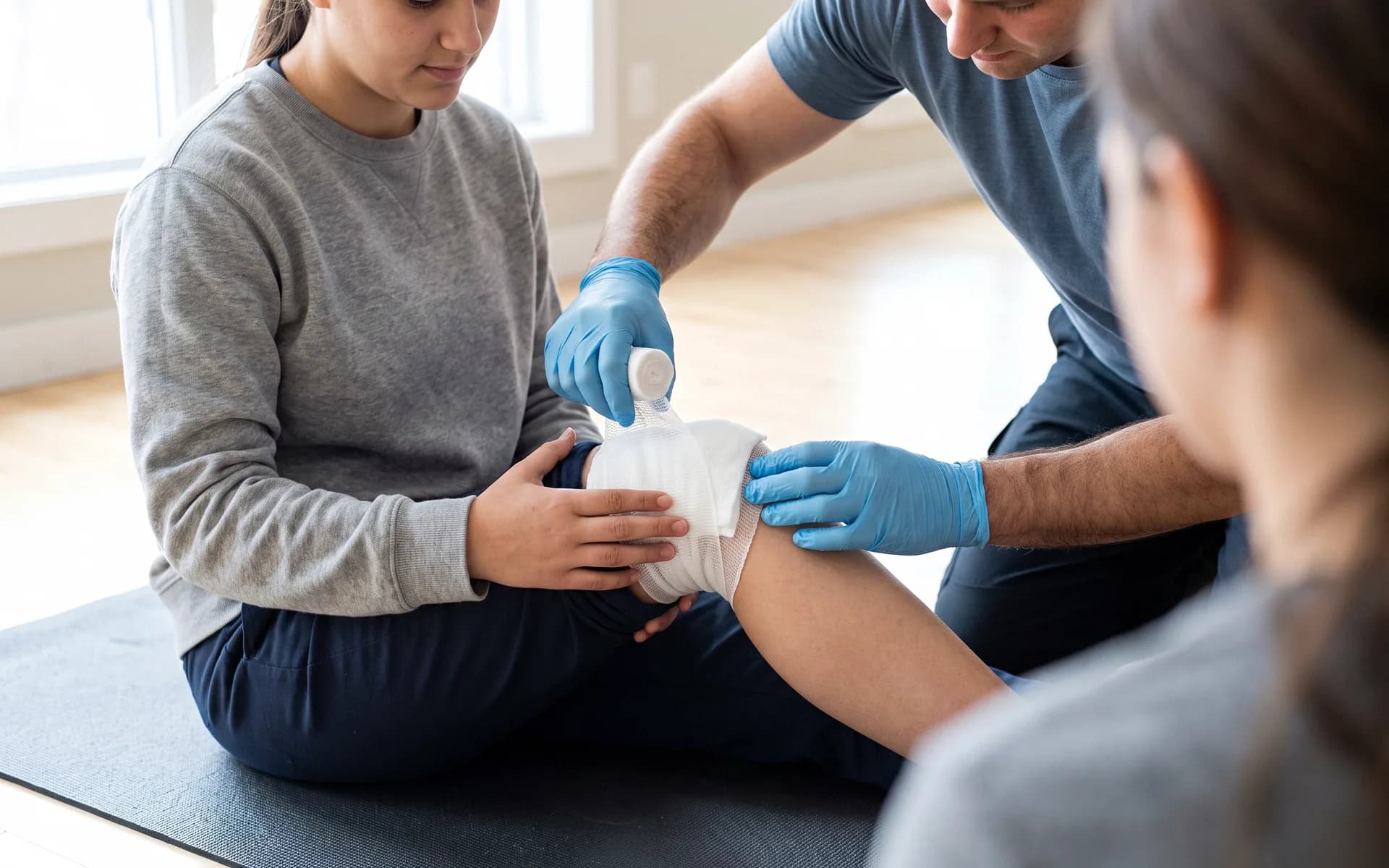
- Hands-on practice. You'll practise CPR on manikins, use a training AED, and work through bandaging and splinting.
- Scenario-based learning. Real-world situations where you apply your skills — not just theory.
- Skills testing and a short exam. Your instructor assesses your CPR technique and first aid responses, and you write a closed-book exam at the end. The pass mark is 75%, and you need to attend the whole course.
- Small class sizes. Everyone gets plenty of time with equipment and personal feedback from the instructor.
The atmosphere is supportive, not stressful. The goal is for you to leave feeling confident, not anxious.
Step 6: Receive your certificate
Once you complete the course and pass your skills assessment, your Canadian Red Cross digital certificate is issued within 2 days. You'll receive it via email, with no waiting weeks for something in the mail.
What you get
- Digital certificate — emailed to you, easy to share with employers
- Red Cross verification — your certification is searchable in the Red Cross database
How long it lasts
| Certification | Valid for |
|---|---|
| Intermediate First Aid | 3 years |
| Basic First Aid | 3 years |
| CPR-C / AED | 3 years |
| BLS for Healthcare (HCP) | 1 year |
When your certificate is coming up for renewal, you can take a shorter recertification course instead of repeating the full program — as long as your certificate hasn't expired.
Let's get you certified
Find the right course, pick a date, and you'll have your Red Cross certificate within 2 days of finishing.