First Aid for Parents — Pediatric Emergencies
CPR for infants and children, choking response by age, and when to call 911. The skills every parent, caregiver, and babysitter should have.
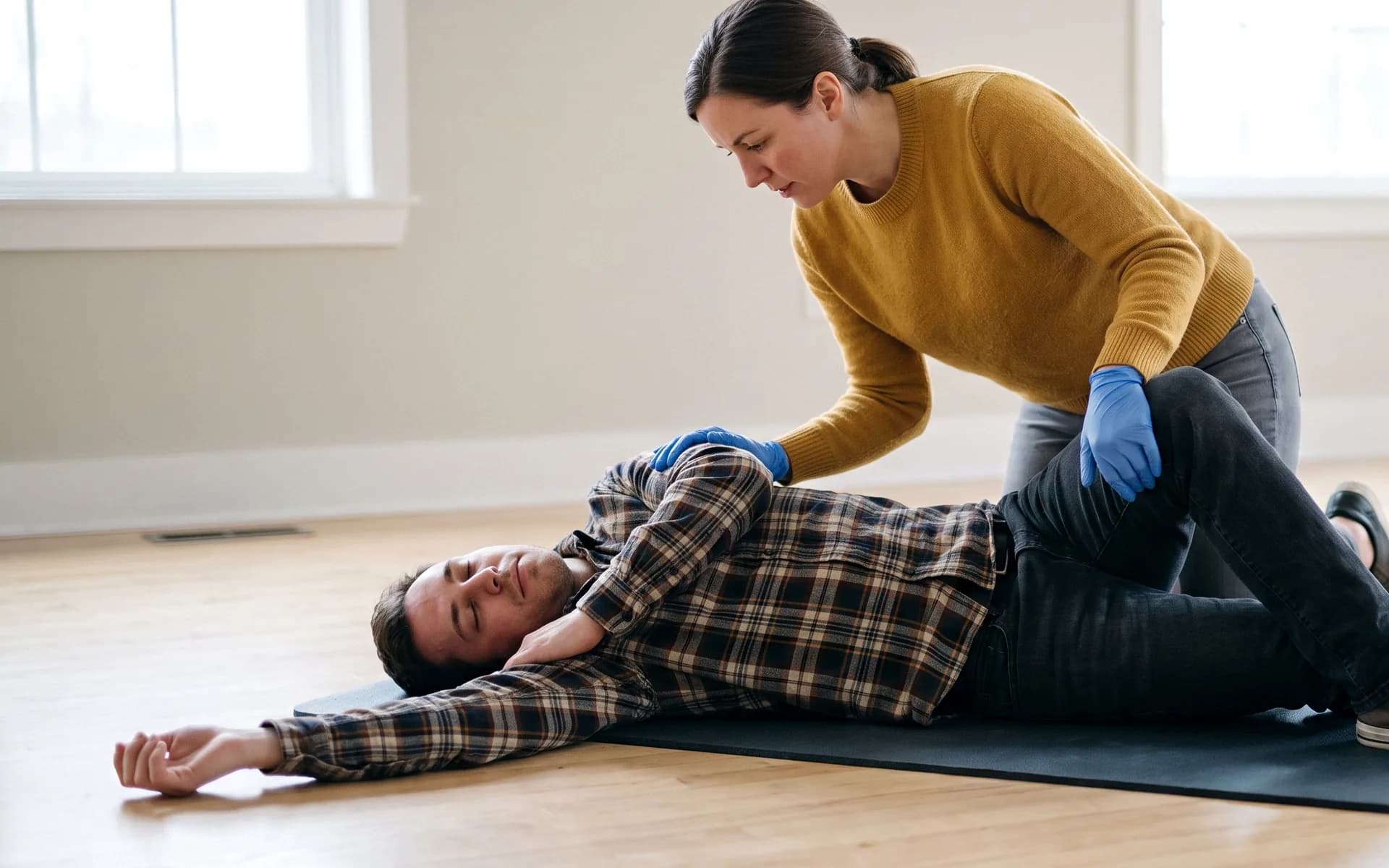
Why every parent should know pediatric first aid
Most childhood emergencies happen at home. Choking, falls, burns, allergic reactions — they don't wait for a paramedic to show up. The first few minutes are yours.
Knowing what to do (and what not to do) in those minutes is the difference between a close call and a catastrophe. This guide covers the essentials, but it's not a substitute for hands-on training.
Scene safety first
Your instinct is to rush in. Fight it — for two seconds. Before you touch the child, scan the area. Is there traffic? Electrical hazards? Water? If the scene isn't safe for you, it's not safe for them.
An injured rescuer helps nobody. Make the area safe first, then provide care.
Unresponsive child: Check–Call–Care
If a child is unresponsive, follow the same three-step framework used by every trained first aider:
- Check — Tap the child's shoulders and shout their name. For infants, flick the sole of the foot. Look for breathing (chest rise) for no more than 10 seconds.
- Call — If no response, call 911 (or have someone else call). Put the phone on speaker. Send someone for an AED if available.
- Care — Begin CPR immediately. Push hard, push fast. Don't stop until EMS arrives or the child starts breathing.
If you're alone with an infant or child and don't have your phone, give 2 minutes of CPR first, then go call 911. Children's cardiac arrests are usually caused by breathing problems — those early breaths matter.
Key CPR differences by age
CPR technique changes based on the patient's size. The ratio stays the same (30 compressions to 2 breaths), but depth, hand placement, and breath delivery are different.
| Infant (<1 yr) | Child (1–8 yrs) | Adult (8+) | |
|---|---|---|---|
| Compression depth | 1.5 inches | 2 inches | 2–2.4 inches |
| Compression method | 2 fingers | 1 or 2 hands | 2 hands |
| Breath delivery | Gentle puffs | Regular breaths | Regular breaths |
| Ratio | 30:2 | 30:2 | 30:2 |
For infants, cover both the mouth and nose with your mouth when giving breaths. For children and adults, pinch the nose and seal your mouth over theirs.
Choking response by age
Choking is the leading cause of injury and death in children under 4. The response depends on age — never perform abdominal thrusts on an infant.
Infant (under 1 year)
- Lay the infant face-down along your forearm, supporting the head and jaw.
- Give 5 firm back blows between the shoulder blades with the heel of your hand.
- Flip the infant face-up. Give 5 chest thrusts using 2 fingers on the center of the chest, just below the nipple line.
- Alternate back blows and chest thrusts until the object comes out or the infant becomes unresponsive.
- If the infant goes unresponsive, begin CPR and call 911.
Child (1+) and adult
- Stand or kneel behind the person. Make a fist and place it just above the belly button.
- Grasp your fist with your other hand and give quick, upward abdominal thrusts (the Heimlich manoeuvre).
- Continue until the object is expelled or the person becomes unresponsive.
- If they go unresponsive, lower them to the ground, call 911, and begin CPR. Check the mouth for visible objects before giving breaths.
When to call 911
Call 911 immediately if the child:
- Is unresponsive or not breathing normally
- Has a severe allergic reaction (swelling, difficulty breathing)
- Has a seizure lasting more than 5 minutes
- Has a suspected head, neck, or spinal injury
- Has severe bleeding that won't stop with pressure
- Has been submerged in water (even if they seem fine after)
- Has ingested a poisonous substance
When in doubt, call. The 911 dispatcher can guide you through first aid steps while paramedics are on the way.
Why CPR-C (not CPR-A)
CPR-A covers adult CPR only. CPR-C covers adults, children, and infants. If you're a parent, caregiver, or anyone who spends time around kids, CPR-C is the course you want.
Both courses include AED training. CPR-C simply adds the pediatric techniques — different compression depths, 2-finger method for infants, back blows for choking — that make it relevant for families.
Most employers also require CPR-C, so it's the better credential to hold regardless.
BraveHeart's youth & family programs
We run programs specifically designed for families and young people:
- CPR-C + AED — A 5-hour course covering infant, child, and adult CPR plus AED use. The go-to for parents.
- Brave Start — Our youth safety course for ages 8 to 12. Builds the confidence to stay safe at home or in public.
- Brave Babysitter — First aid, CPR, and child safety skills for babysitters ages 11 to 15.
All courses are taught in person with hands-on practice on manikins. CPR-C + AED is a Canadian Red Cross certification valid for 3 years. Brave Start and Brave Babysitter issue a BraveHeart certificate.
Get trained for the emergencies that matter most
Learn infant, child, and adult CPR in a single 5-hour course. Hands-on practice, Red Cross certified.