
What Does CPR Stand For? Your Guide to Cardiopulmonary Resuscitation
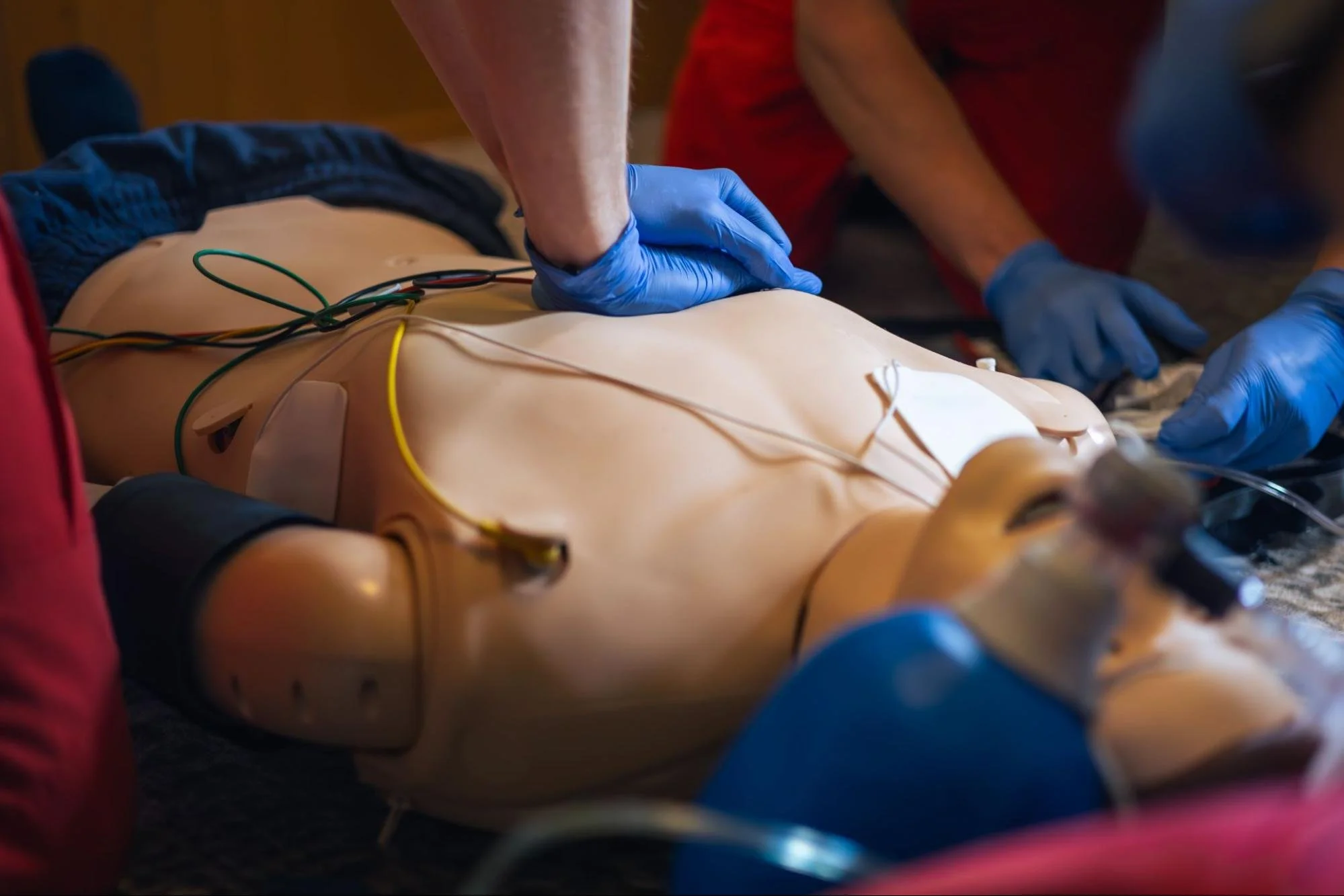
The three simple letters—C.P.R.—represent one of the most critical emergency procedures known worldwide. But what does CPR stand for? It stands for Cardiopulmonary Resuscitation, a life-saving technique performed when someone's breathing or heart has stopped.
Knowing how to perform CPR is an essential skill that empowers bystanders to act during a medical crisis. When integrated with First Aid and the quick use of an automated external defibrillator (AED), CPR dramatically increases the chances of survival for victims of cardiac arrest. This guide dives into the principles, techniques, and training options for CPR
Why CPR Matters: Stopping Brain Damage
The moment a person’s heart stops, time becomes the most crucial factor. After just a few minutes without oxygen, the person faces severe, potentially irreversible brain damage.
CPR is an immediate intervention designed to buy time until professional Emergency Medical Services (EMS) or advanced medical care arrives. By performing chest compressions, we manually pump blood through the body, and with rescue breaths (if trained), we provide oxygen to that blood. This simple, two-part action keeps the oxygen flowing, dramatically increasing the chance of survival and reducing the risk of permanent injury.
By learning CPR, you can:
Recognize cardiac arrest quickly
Perform chest compressions with confidence
Use an AED safely
Support someone until EMS arrives
Work effectively with others during a response
What Does CPR Stand For? Decoding the Medical Terms Behind CPR
Understanding the full name of cardiopulmonary resuscitation gives clarity to what happens to the body during a cardiac arrest and why this skill is so crucial.
Cardio: The Heart
The word cardio is derived from the Greek word for heart. The heart is the body's central pump, circulating blood to all organs and tissues. When a cardiac arrest occurs, the heart's electrical system malfunctions, causing it to stop pumping. Without immediate intervention, the lack of blood flow quickly leads to serious brain damage.
Pulmonary: The Lungs
Pulmonary refers to the lungs. The lungs are responsible for bringing oxygen into the blood and removing carbon dioxide. In CPR, rescue breaths (if used) provide essential oxygen to the lungs, which is then circulated by the force of the chest compressions.
Resuscitation: Revival
To resuscitate means to revive or restore consciousness. The goal of resuscitation education is to equip you with the skills needed to keep a person alive and minimize damage until advanced medical help can take over.
When and How to Apply CPR: The First Steps
The immediate goal of a bystander is to start the Chain of Survival by recognizing the emergency, calling for emergency medical help, and starting CPR immediately.
Recognizing the Need
CPR is necessary when a person is unresponsive and not breathing normally (or not breathing at all). The first step is always to ensure the scene is safe and then check for responsiveness. If the person shows no signs of life, you must call 9-1-1 immediately (or your local Emergency Medical Services number).
The Essential CPR Techniques
Following Canadian Red Cross guidelines, rescuers should:
Check, Call, Care: Check the person and the scene, call 9-1-1, and then begin care (CPR).
Compressions: Deliver 30 high-quality, deep, and fast chest compressions (at a rate of 100-120 per minute).
Breaths: Open the airway and give 2 effective rescue breaths.
Repeat: Continue cycles of 30 compressions and 2 breaths.
Hands-Only CPR
In cases where a rescuer is unwilling or unable to perform mouth-to-mouth breathing, the Canadian Red Cross recognizes Hands-Only CPR (also known as compression-only CPR). This involves continuous, high-quality chest compressions without rescue breaths.
While standard CPR (compressions and breaths) is still the gold standard, Hands-Only CPR (continuous compressions) is an effective alternative when a rescuer is unable to give rescue breaths. It is significantly better than doing nothing at all.
Integrating the AED
While not technically part of the acronym CPR itself, the automated external defibrillator (AED) is an essential partner in modern resuscitation education. For a shockable rhythm, an AED delivers an electrical charge that can reset the heart, making it the definitive treatment for many cardiac arrests.
What are the First Aid Courses That Teach CPR in Nova Scotia?
The Canadian Red Cross, through training partners such as BraveHeart in Nova Scotia, offers several first aid courses designed to equip citizens and first responders with life-saving skills. These programs ensure participants meet critical safety standards and gain proficiency in cardiopulmonary resuscitation (CPR) techniques, preparing them to act quickly during a medical emergency.
Basic (Emergency) First Aid
This one-day course teaches fundamental first aid skills for immediate, life-threatening emergencies. It includes essential cardiopulmonary resuscitation and AED training. The Blended Learning Course option is popular, allowing students to complete theory online before required in-person skills practice to meet necessary safety standards.
Intermediate (Standard) First Aid
A comprehensive two-day course covering advanced injury management and complex scenarios. It requires extensive hands-on skills practice, building upon the basics of cardiopulmonary resuscitation. This program is ideal for individuals seeking in-depth first aid knowledge rooted in current resuscitation science and best practices.
Marine Basic First Aid
Designed specifically to satisfy Transport Canada regulations, this program tailors its first aid and skills practice to marine challenges. It emphasizes immediate cardiopulmonary resuscitation because first responders are often delayed at sea. A convenient Blended Learning Course is available, ensuring mariners maintain high safety standards for emergency care.
Basic Life Support (BLS)
This advanced course, primarily for healthcare professionals, focuses on high-performance cardiopulmonary resuscitation and rapid team response. Rooted deeply in current resuscitation science, the intensive program requires constant in-person skills practice. It exceeds the CPR component of general first aid, prioritizing fast, effective care for cardiac arrest.
CPR/AED
This focused program concentrates solely on cardiopulmonary resuscitation and Automated External Defibrillator use. Participants review current resuscitation science guidelines and execute intensive skills practice to maintain competence. This stand-alone training ensures individuals with existing first aid certification can refresh their critical life-saving techniques and meet required safety standards.
Learning CPR: Your Role in the Chain of Survival
When a cardiac arrest happens, the outcome depends on a series of rapid, coordinated actions—this is known as the Chain of Survival. Your decision to call for emergency medical help and start CPR is the vital first link.
The Chain of Survival
Recognition of the cardiac arrest and call for emergency medical help (EMS).
Early CPR (starting chest compressions immediately).
Rapid Defibrillation (using the automated external defibrillator).
Effective Advanced Life Support (when healthcare professionals or First responders take over).
Post-resuscitation care (continued medical care in a hospital).
Your CPR training places you firmly at the start of this chain, providing the most essential Basic Life Support until Emergency Medical Services arrive.
Learn CPR in Our First Aid Training Courses in Nova Scotia
At BraveHeart First Aid, we pride ourselves on delivering comprehensive First Aid and Cardiopulmonary Resuscitation (CPR) training. Our courses, which include both standard and emergency options, equip participants with critical, life-saving skills.
We utilize engaging teaching methods, emphasizing hands-on in-person skills practice to ensure competency. Whether you require workplace certification or personal readiness, our diverse programs help you meet necessary safety standards with confidence.